Wrapping Brisket and Ribs in Butcher Paper
By the team at Shop Butcher Paper ·
The wrap is the one move in a long cook that changes the bark, the timing and the juice at once. Here is when to do it, how much paper to pull and how to fold it so it stays shut.
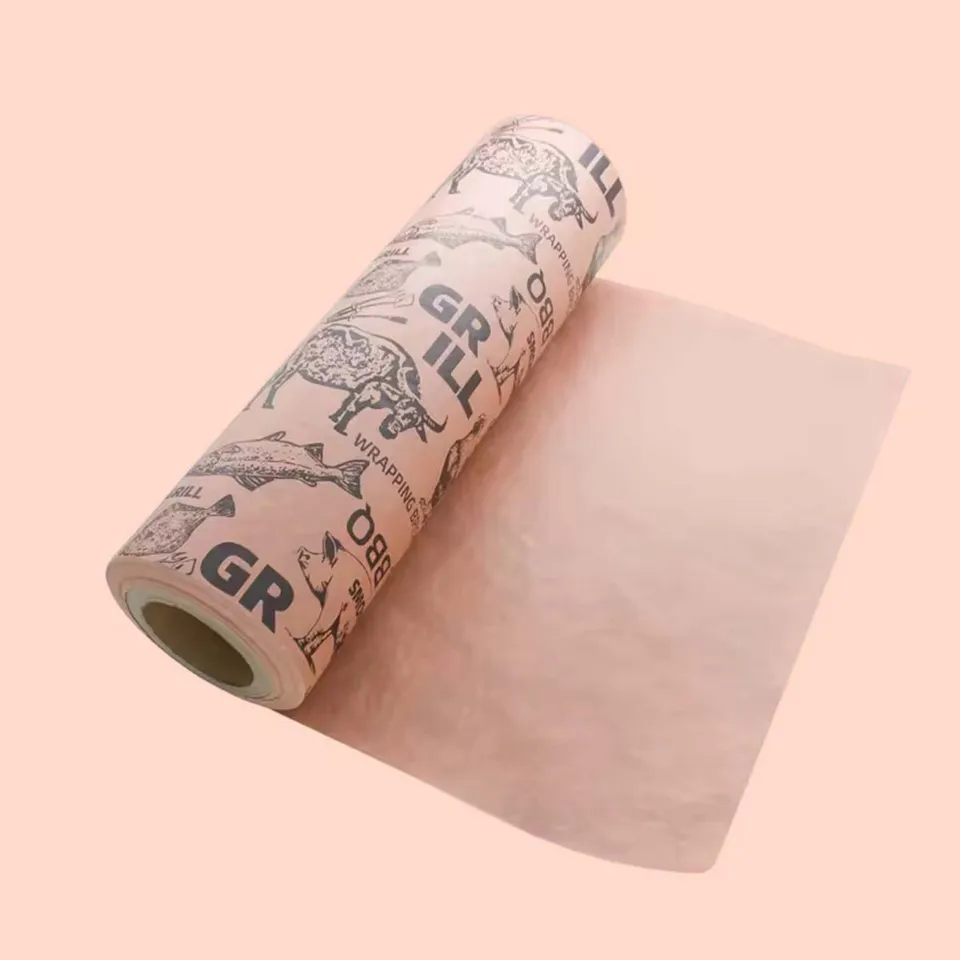
Why wrap a brisket at all?
Somewhere between 150 and 170°F the internal temperature stops climbing. Surface moisture is evaporating as fast as the fire can push heat in, and the meat sits there. Pitmasters call it the stall.
Wrapping slows that evaporation. The meat starts climbing again and finishes an hour or two sooner. Done in foil, the wrap steams the crust soft. Done in uncoated pink paper, the crust stays put because the paper breathes.
When do you wrap a brisket in butcher paper?
Go by the bark first and the thermometer second. The bark should be a deep mahogany to near black, dry to the touch, and set. Press a finger on it. If the rub smears, it is not ready, however the probe reads.
Once the bark is set, check the flat. Most packers hit that point around 165°F internal, four to six hours in at 250°F. Some cooks wait until 170. Wrapping earlier than a set bark is the most common reason a paper-wrapped brisket comes out pale.
The point and the flat cook at different rates, which confuses anyone reading one probe. Probe the flat, because it is thinner and finishes first. If the flat reads 165 and the bark is set, wrap; the point catches up inside the paper.
- Color: dark mahogany across the top, no pale rub patches
- Touch: the bark does not come off on a dry finger
- Temperature: 160 to 170°F in the thickest part of the flat
- Time: usually four to six hours in, but the first three signs win
When do you wrap ribs?
Ribs set faster. On spare ribs at 250°F the bark is usually there by hour three, and the meat has pulled back a quarter inch from the bone ends. Baby backs get there sooner.
The color test is the same as brisket, but internal temperature matters less on a thin cut. Look at the bone pull and the surface. Many cooks wrap ribs for a shorter stretch, one to two hours, then unwrap to firm the outside before the glaze.
Baby backs are leaner, so a long wrap dries them out. Keep them to an hour, or skip the wrap and let the glaze set the finish. Spare ribs carry more fat and take the full two hours without trouble.
How much paper do you pull?
For a whole packer, pull two arm-lengths off the roll. That is close to four feet on most people. It gives you enough to roll the brisket over twice with paper to spare at each end. Tear a second sheet the same length and overlap the two by a hand's width.
Tear against the dispenser bar or across a knife edge rather than ripping freehand. A ragged tear leaves a short corner, and the short corner is always the one that will not tuck under the point.
An 18 in roll is too narrow for a packer on its own. A 24 in roll covers a flat, and two overlapped 24 in sheets cover a packer. A 36 in roll covers a packer in one sheet, which is why smokehouses doing volume run 36. The sheet counts per roll width are worked out in the roll width and length math guide.
How to fold a brisket in butcher paper
- Lay the two sheets on the table, overlapping lengthwise, so you have one wide surface of pink paper.
- Set the brisket fat side up near the edge closest to you, with the flat parallel to that edge.
- Bring the near edge up and over the top of the brisket, pulling it snug against the far side.
- Fold both sides in toward the meat, tight, the way you fold a gift. Crease the paper against the brisket so it holds the shape.
- Roll the brisket away from you, once, then again, keeping tension on the paper the whole time.
- Finish with the seam on the bottom. The weight of the meat holds it shut, so there is no tape and no string.
- Lift it with two hands under the flat, not the point, and set it back in the smoker seam down.
Ribs fold the same way with one sheet. Lay the rack bone side up on the paper, fold the long edge over, tuck the ends, roll once, seam down.
Pink butcher paper or foil for the bark?
Both finish the cook. They do not finish it the same way. Foil is a sealed bag: every drop of rendered fat and steam stays in, and the bark goes soft and wet. Paper is a loose coat: fat soaks into the sheet, steam leaves through it, and the bark stays dry.
| What you want | Pink butcher paper | Foil |
|---|---|---|
| A bark that stays crisp | Yes, the sheet breathes | No, it steams soft |
| Fastest push through the stall | A little slower | Fastest |
| Smoke flavor after the wrap | Some still gets in | None, it is sealed |
| Holding juice for serving | Less, some soaks in | Most, it pools |
| Rest in the wrap for an hour or more | Good, the crust holds | Bark softens further |
| Pork butt that will be pulled anyway | Fine | Fine, bark is less important |
The wider comparison, with parchment in the mix, is in the butcher paper versus parchment versus foil guide.
What happens to the paper during the cook?
Within the first half hour the fat starts to wick in. The paper darkens to a deep orange where it touches the point and goes translucent along the folds. That is normal. There is no wax to melt and no poly to blister, so the sheet just gets greasy.
By the end it will tear if you drag it, which is why you lift from underneath. A second sheet on the outside keeps the first one from splitting on a heavy packer. Do not re-wrap a brisket in fresh paper partway through; it only dumps heat.
The smoke still finds its way in. Paper is porous enough that the last two hours in the wrap keep adding color and a little flavor, which foil never allows.
Resting a brisket in butcher paper
Leave it wrapped. Pull the brisket at 200 to 205°F, when a probe slides in like warm butter. Let it sit in its paper on the counter for ten minutes to vent the first burst of steam.
Then move it, still wrapped, into a towel-lined cooler or a holding cabinet set low. An hour is the minimum. Two is better. The paper keeps enough heat in to finish breaking down collagen while the crust stays dry.
If the bark feels soft when you unwrap, it is usually rest moisture, not a failed wrap. Open the paper and leave the brisket on the board for five minutes. The surface tightens back up as it vents.
Unwrap on the cutting board and slice across the grain. Save the paper under the board; it catches the juice and the trimmings and goes straight in the trash.
Mistakes that spoil a paper wrap
- Wrapping before the bark sets, so the paper steams a pale crust that never comes back
- Using one 18 in sheet on a packer and leaving the point exposed at both ends
- Folding loose, so the paper tents, air moves through the gap and the stall drags on
- Setting the seam up, so the folds open the first time the brisket is moved
- Reaching for waxed white instead of pink, which seals like foil and smells like wax
- Spraying the paper with water or sauce before the wrap, which softens it before it is loaded
Which butcher paper holds up to a full packer?
A 24 in x 1,000 ft roll is the usual pick if you only buy one. It handles flats in a single sheet and packers with two. Busy pits wrapping whole briskets all day move to 36 in rolls.
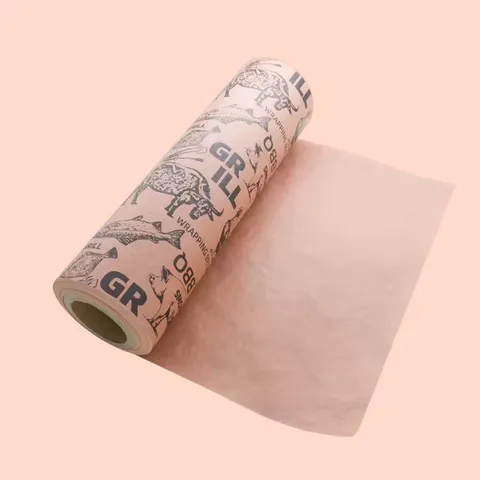
If cutting from a roll slows the line, pre-cut smoking sheets at 24 x 36 in or 24 x 48 in are ready to lay out. The roll core still fits a counter dispenser when you want both. Start with the BBQ smoking paper sheets and tell us the brisket count per day; the written quote comes back in one business day.
Papers in this guide
Questions about this guide
What internal temperature should a brisket be when I wrap it in butcher paper?
Around 165°F in the flat, but only after the bark is set and dark. Let the bark decide; the thermometer confirms.
How much butcher paper does one brisket wrap take?
Two sheets about four feet long each, overlapped. Pull two arm-lengths off the roll per sheet and you will not run short.
Should the seam face up or down when I wrap a brisket in butcher paper?
Down. The weight of the meat holds the folds shut, so you need no tape, string or clips.
Does wrapping ribs in butcher paper make them fall off the bone?
Less than foil does. Paper keeps some texture on the surface, so the ribs bite clean instead of sliding off.
Can I rest a brisket in the same butcher paper it cooked in?
Yes, and you should. Vent it on the counter for ten minutes, then rest it wrapped in a cooler for one to two hours.
Why did my butcher paper tear when I moved the brisket?
Fat soaks in during the cook and the sheet weakens. Lift from underneath with both hands, and double-sheet a heavy packer.
Is it safe to put pink butcher paper in a smoker at 275°F?
Yes. Uncoated pink paper has no wax or poly to melt, and it is run at 225 to 275°F in smokers every day.
Can I wrap a brisket in white or brown butcher paper instead of pink?
Uncoated brown works much like pink. Uncoated white works too but shows the grease. Waxed white should stay out of the smoker.
Do I need to spritz the brisket before wrapping it in butcher paper?
No. A wet surface softens the paper before it goes back in. Wrap it dry and let the rendered fat do the rest.
What width of butcher paper roll do I need for ribs?
An 18 in or 24 in roll covers a rack of ribs in one sheet. The pink butcher paper rolls come in both widths.
Something else? Ask us on WhatsApp or call (503) 461-4788.
Tell us what you wrap
Send the paper, a size and a quantity, plus a logo if you have one. We reply in writing within one business day with a price and, for printed paper, a free design proof. Prefer to talk? Call (503) 461-4788 or message us on WhatsApp.